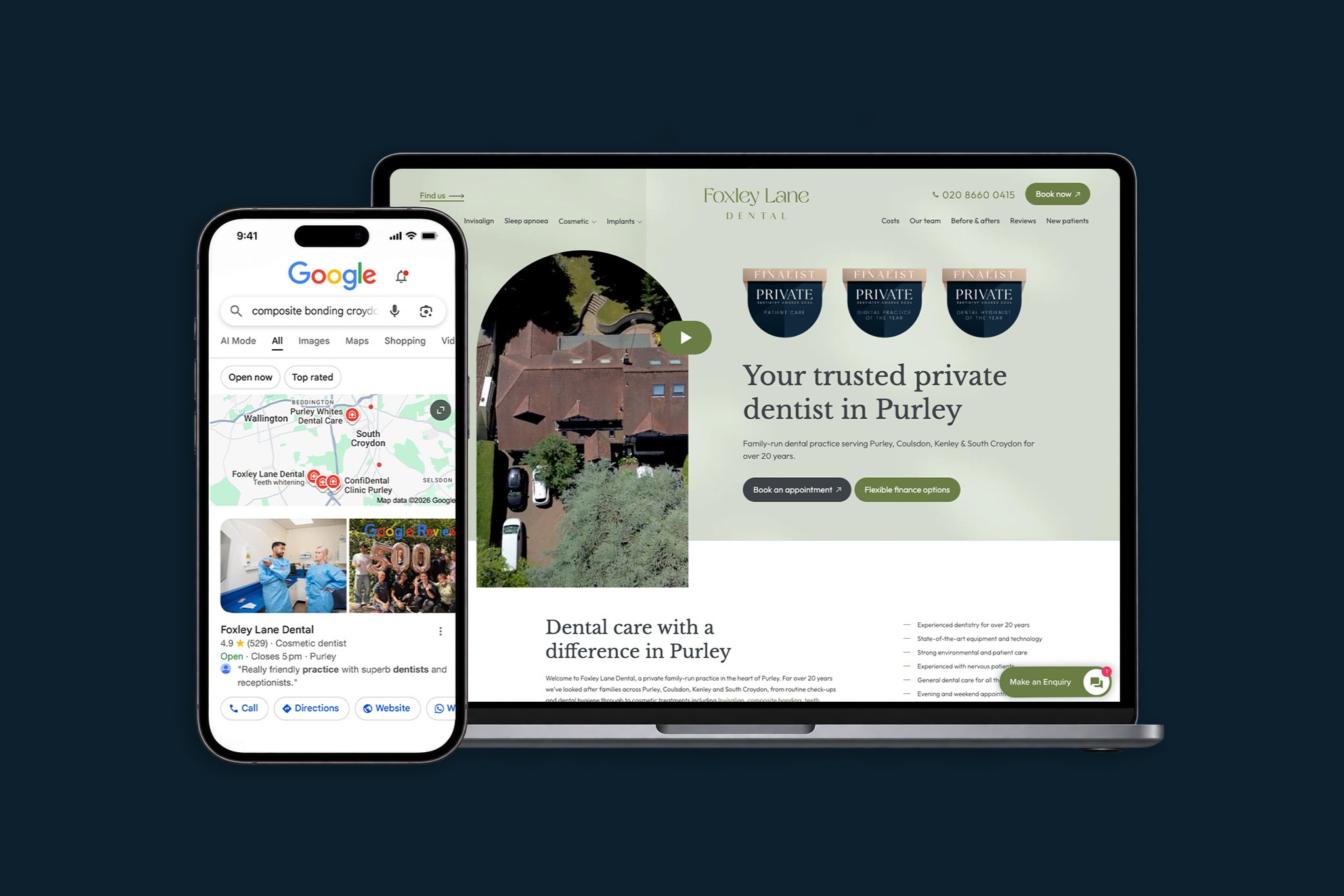
Dental SEO services: Why your dental practice isn’t ranking on Google (and the local SEO fixes that actually work)
If you’ve ever searched for your own practice on Google and found competitors sitting above you in the results, it’s frustrating. Especially when you know your clinical work is stronger.
You might be getting by on word of mouth, perhaps topping up with Google Ads, but underneath it, there’s usually a bigger question sitting there:
Why isn’t my practice showing up when people are actively searching for what we offer?
The honest answer is that most dental websites aren’t set up to rank. Not because the practice is doing anything wrong, but because search engine optimisation (SEO) has changed, and a lot of sites haven’t kept up.
By the end of this guide, you’ll understand the five fundamentals that actually move rankings for UK dental practices, and what your dental SEO should really be doing behind the scenes.
Key takeaways
- Google now prioritises local relevance, trust signals and real-world authority over generic SEO tactics
- Most dental websites are missing the basics needed to rank for treatment and location searches
- Strong local SEO is built around Google Business Profile, service pages and consistent reviews
- SEO compounds over time, unlike paid ads which stop the moment you stop spending
- The right strategy focuses on real rankings and enquiries, not vanity metrics
How Google ranks dental practices in 2026 (the short version)
Google has moved a long way from the old “keywords and backlinks” model.
Today, it’s trying to answer a simple question:
Which practice is the most relevant, trusted and accessible option for this patient, in this location, right now?
And this is where most practices fall short.
Local relevance now matters more than generic SEO tricks
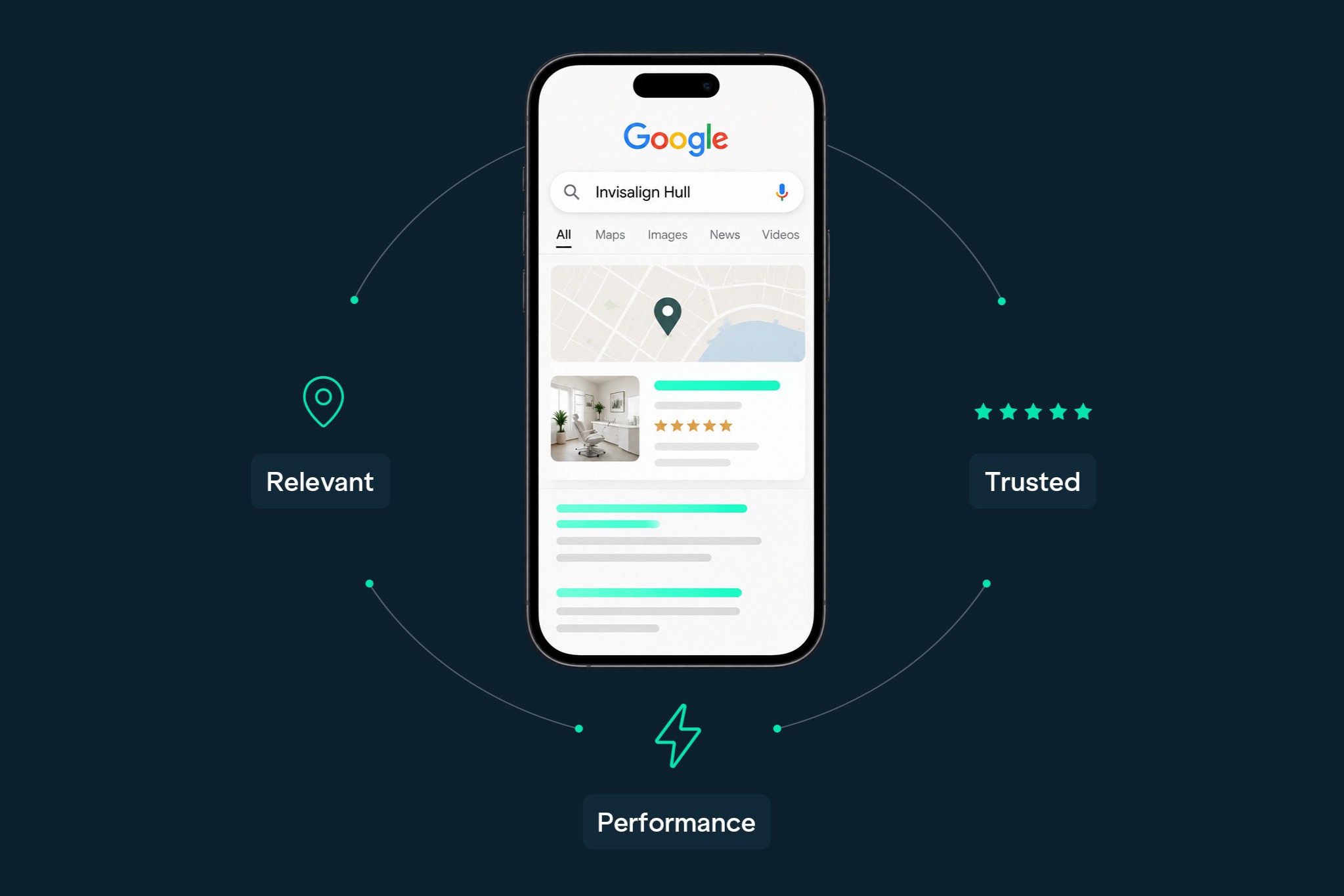
If someone searches “Invisalign Hull” or “emergency dentist near me”, Google isn’t looking for the most technically optimised website. It’s looking for:
- A practice clearly offering that treatment
- In that specific location
- With proof that patients trust it
This is what sits at the heart of local SEO for dentists. It’s not about gaming the system - it’s about making your practice easy for Google to understand and trust.
Many dental websites are invisible on mobile-first indexing
If your website is more than a few years old, there’s a good chance it was built before mobile-first indexing became standard.
That means:
- Slow load speeds
- Poor mobile layout
- Weak page structure
All of which limit your ability to rank over time.
This is where technical SEO comes in, making sure your site is fast, crawlable and structured properly so Google can actually index and rank it. Even if everything looks fine on desktop, Google is judging your site based on mobile performance first.
The 5 local SEO fundamentals every UK dental practice needs
This is where most dental practice SEO either works or falls apart.
1. A Google Business Profile that actually drives bookings from dental patients
Most practices have a Google Business Profile, but few use it properly.
A well-managed profile should:
- Appear consistently in the local map pack
- Show recent reviews and responses
- Include accurate services, products and descriptions
- Be updated with posts and photos
- Cover the geographical areas you serve strategically throughout
This is often the difference between showing up and being invisible on Google Maps.
Strong local SEO and Google Business Profile management ties directly into enquiries, not just visibility.
2. Service pages that match real customers' search behaviour
A single, generic “Services” page doesn’t rank, because patients don’t search for the term “dental services”.
They search for more ‘human’ keyword sets, such as:
- “Dental implants Croydon”
- “Composite bonding near me”
- “Emergency dentist open now”
Therefore, each of these needs a dedicated, well-structured page.
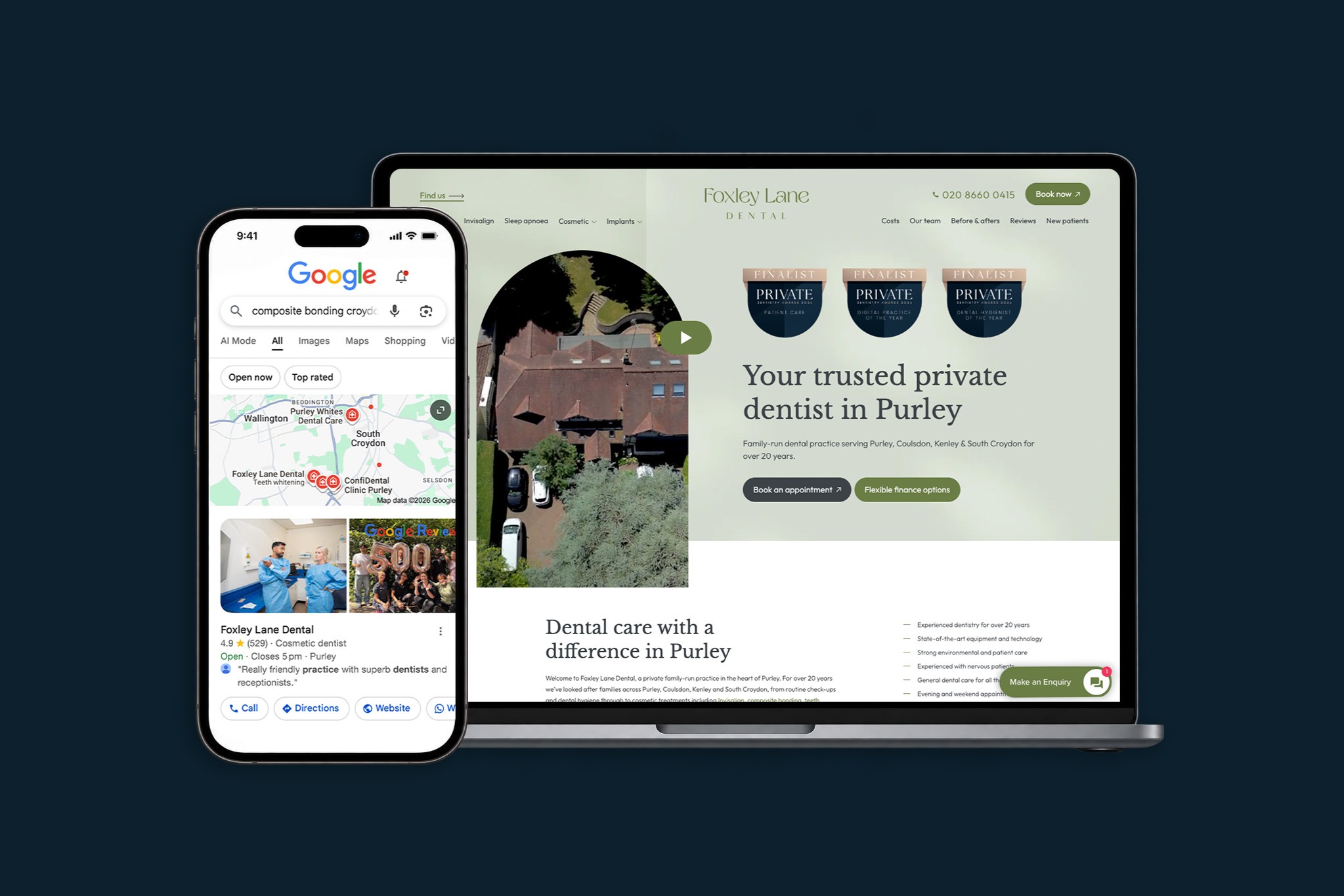
This is where a lot of dental SEO agencies fall short: they create generic content that doesn’t align with real search intent.
3. Location and treatment combinations
This is one of the biggest missed opportunities.
Google needs to see clear connections between:
- What you offer
- Where you offer it
For example:
- Invisalign in Croydon
- Dental implants in Purley
- Hygienist in South London
Without these combinations, you’re competing nationally instead of locally, which makes ranking much harder.
4. Reviews flowing in consistently
Reviews have become one of the strongest ranking signals in local SEO - not just the number, but:
- Recency
- Relevance
- Consistency
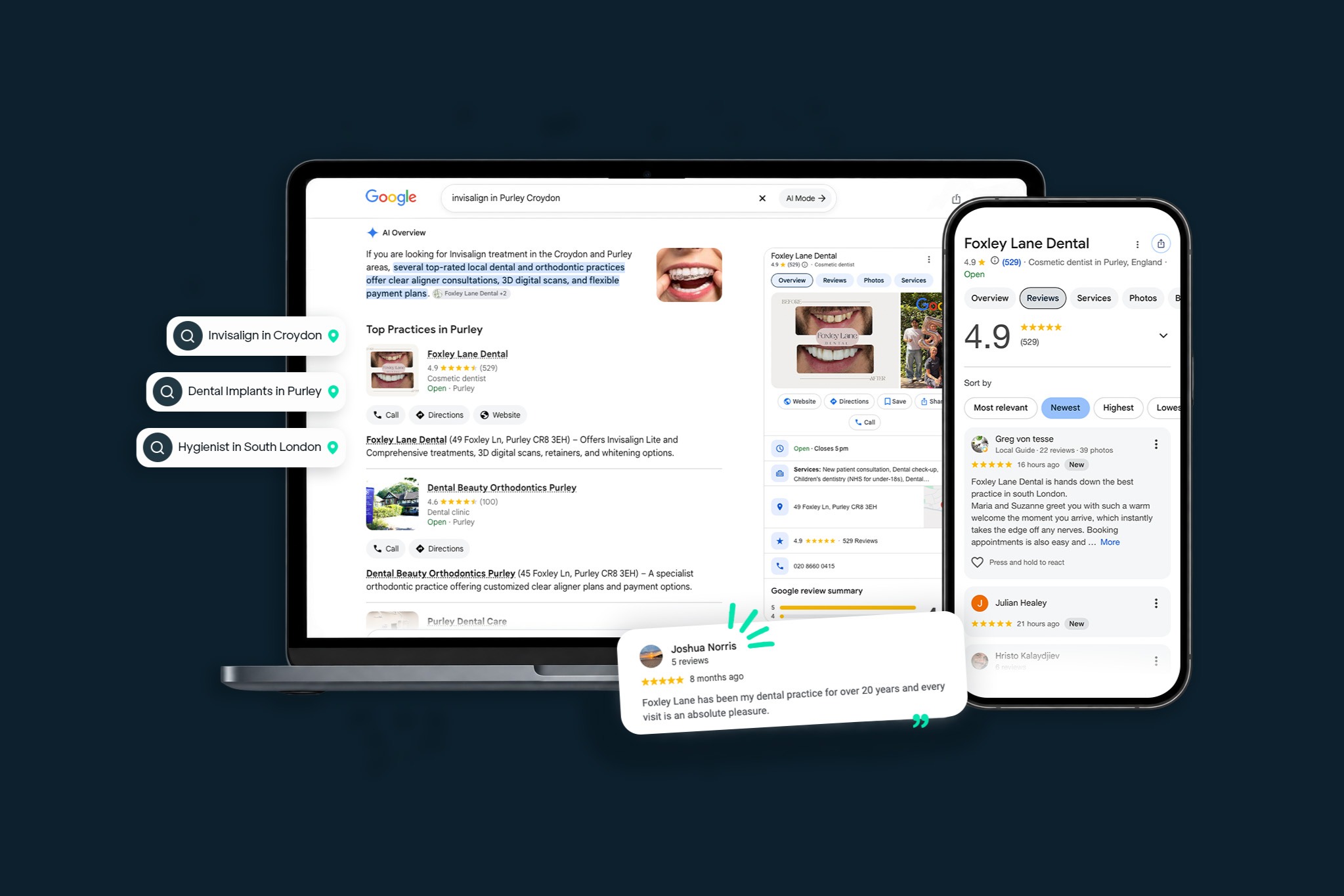
A steady stream of reviews often acts as the tiebreaker between similar practices, and also directly impacts patient trust - which is why it sits at the centre of effective dentist Google rankings strategies.
5. Backlinks from local and trusted sources in the dental industry and beyond
Backlinks still matter, but not in the way most people think.
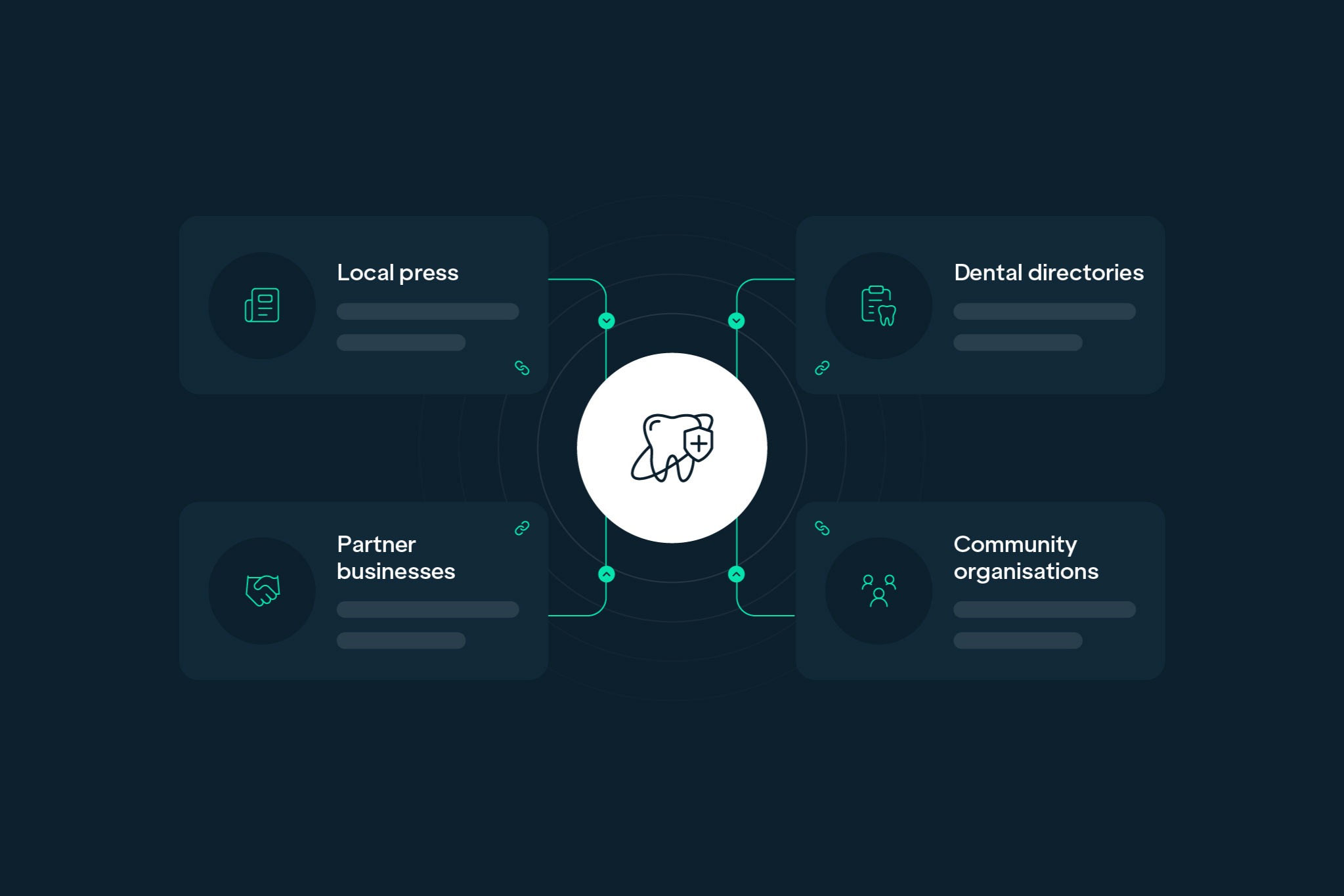
For dental practices, quality beats quantity, and the most valuable links often come from:
- Local directories
- Partner businesses
- Community organisations
- Press or local coverage
This is about building credibility, not chasing volume.
What dental SEO services should actually include for UK practices
This is where things get a bit murky, as lots of practices invest in SEO without really knowing what they’re getting.
Good dental SEO services should be transparent and tied directly to business outcomes.
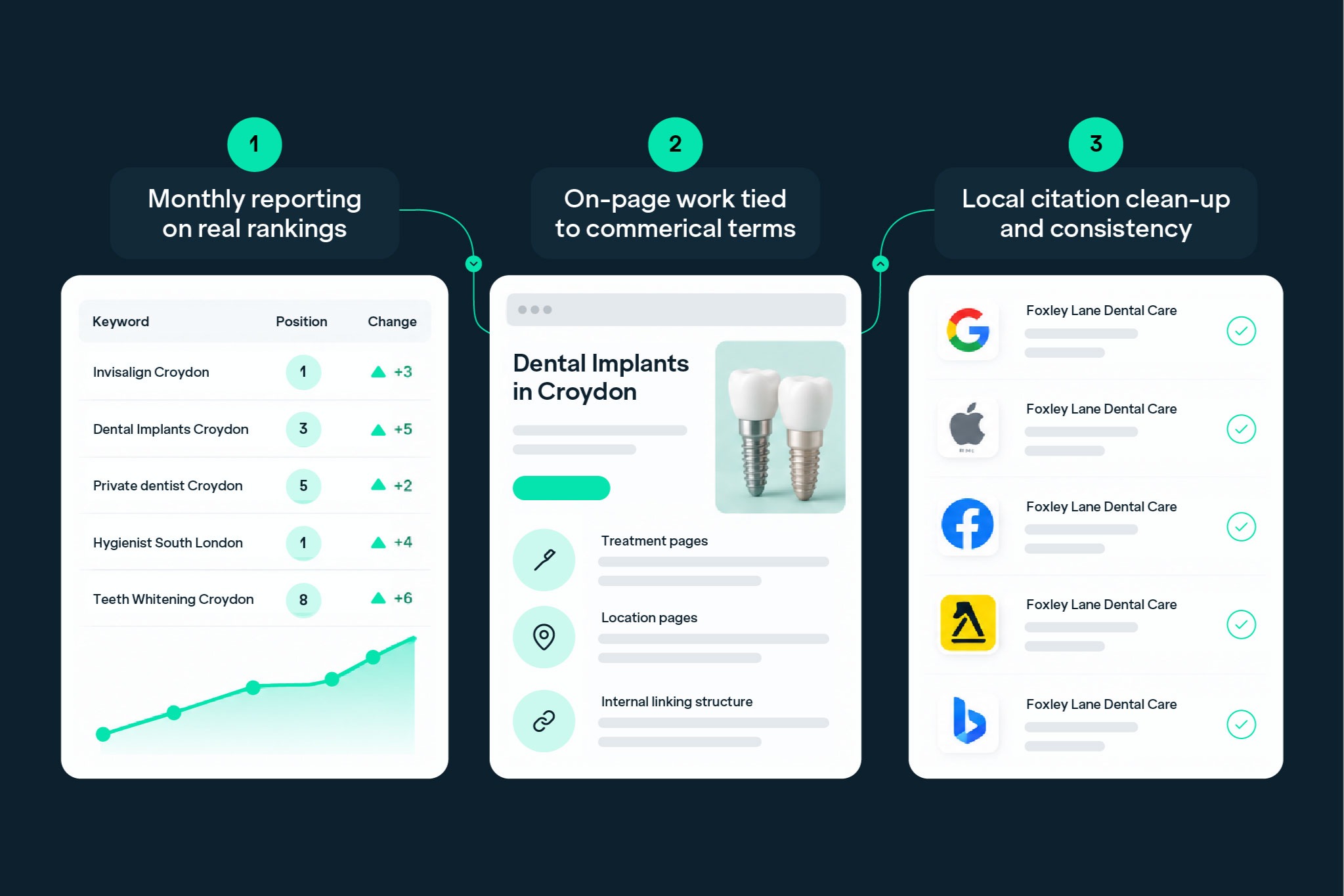
Monthly reporting on real rankings
You should know:
- Which keywords you’re tracking
- Where you rank for them
- How those rankings are changing
Not vague traffic graphs or “visibility scores”.
On-page work tied to commercial terms
Your SEO work should focus on terms that bring patients in, not filler blog content with no commercial intent.
This includes:
- Treatment pages
- Location pages
- Internal linking structure
Local citation clean-up and consistency
Your name, address and phone number need to be consistent everywhere online.
Inconsistent listings confuse Google and weaken your local signals.
Clear strategy, not generic packages
Red flags to watch for:
- Fixed “SEO packages” with no custom plan
- No keyword tracking
- No explanation of what’s being done each month
A good dental SEO consultant will explain the work clearly and tie it back to growth.
Why SEO compounds (and Google Ads doesn’t)
This is one of the biggest mindset shifts for practice owners: Google Ads has its place, but it’s not the same as SEO.
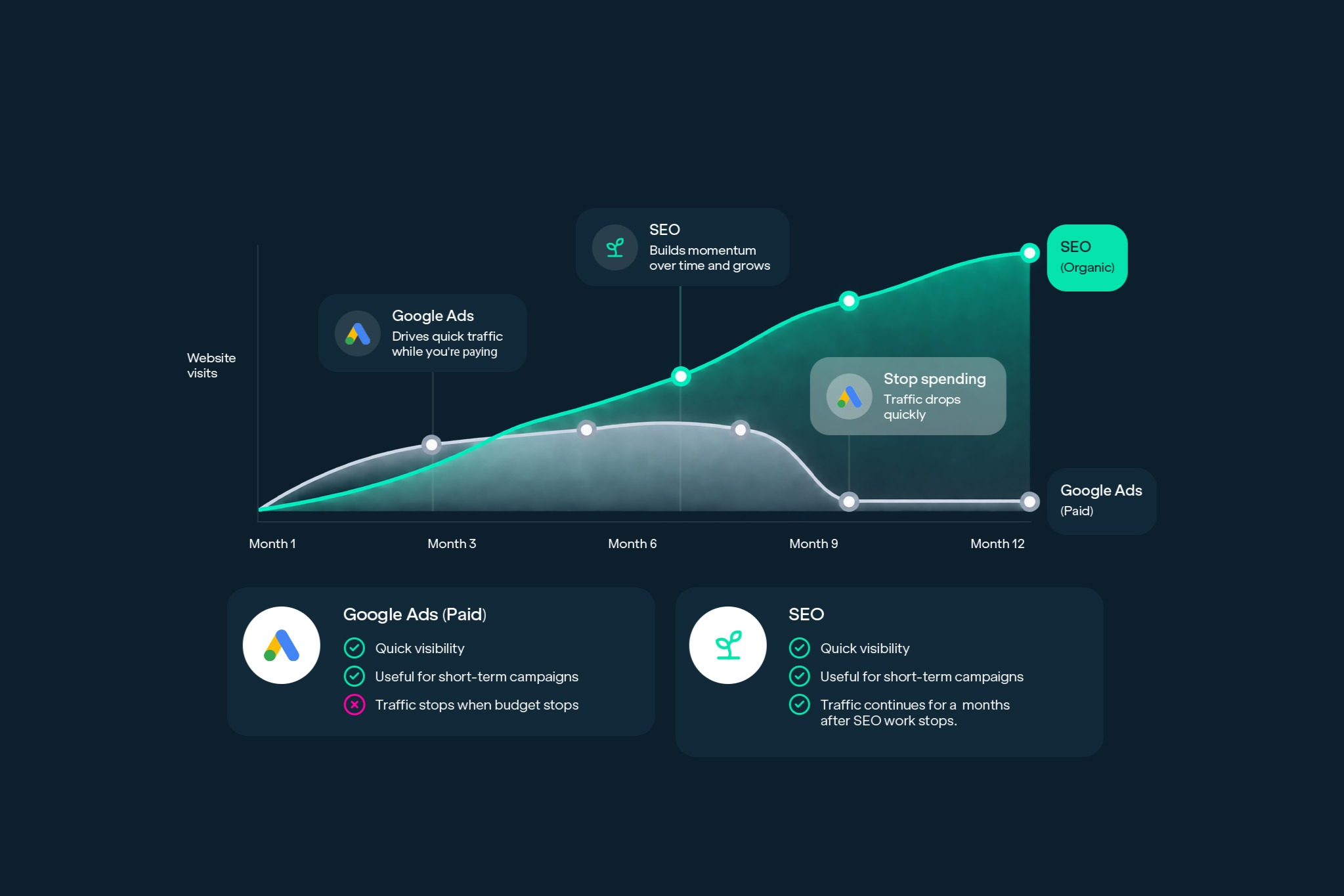
Paid traffic stops when budget stops
With ads, visibility is essentially ‘rented’ - so the moment you pause spending, enquiries drop.
SEO builds long-term visibility
With SEO, each improvement builds on the last, so over 6 to 12 months, you typically see:
- More keywords ranking
- Higher positions
- Increased organic traffic
- Lower cost per patient
This is why many practices start with ads, then gradually shift towards organic as their SEO gains traction.
If you’re weighing this up, it’s worth understanding the difference between search engine optimisation and paid channels in more detail.
Common questions dental, orthodontic and aesthetics practice owners ask
How long does dental SEO take to show results?
Most dental practices start seeing measurable improvements within 3 to 6 months, with stronger results building over 6 to 12 months as rankings improve.
How much should a dental practice spend on SEO per month?
A sensible dental SEO budget typically starts at around £800 per month, with many growing practices investing between £800 and £3,000+ per month, depending on their location, competition and growth goals.
The monthly fee matters less than what's included. While you may find agencies offering SEO much less than the above price bracket, it's worth asking exactly what they're doing. If the service is limited to publishing a few blog posts each month, it's unlikely to deliver meaningful improvements in today's search landscape. In 2026, effective dental SEO should take a holistic approach by combining Local SEO, which helps practices appear in local searches and Google Business Profile results, AI search optimisation, which improves visibility in AI-powered search experiences, and traditional SEO, which strengthens your website's technical performance, content and authority in Google's organic search results. Investing in a strategy that covers all three is far more likely to deliver sustainable rankings and new patient enquiries than choosing the cheapest monthly package.
Is SEO better than Google Ads for dentists?
SEO and Google Ads serve different roles: Google Ads drive immediate traffic, while SEO builds long-term visibility and reduces cost per patient over time - so it’s less about one being better or worse, and more about choosing the right fit for your practice.
What is local SEO for dentists?
Local SEO focuses on helping your practice appear in location-based searches, especially in Google Maps and local results, by improving relevance, trust and proximity signals.
How do I rank my dental practice on Google Maps?
You need a fully optimised Google Business Profile, consistent reviews, accurate business information and strong local website signals.
Do the results from dental SEO agencies actually work?
Good dental SEO agencies do deliver results, but the difference comes down to whether those dental SEO agencies focus on real rankings and enquiries, or just activity and reports.
Should a dentist do their own SEO or hire an agency?
You can manage some basics in-house, but most practices benefit from working with a dental SEO specialist who understands both SEO and the dental market.
What’s the difference between SEO and PPC for dentists?
SEO builds organic visibility over time, while PPC delivers immediate traffic through paid ads - most practices use both at different stages of growth.
How Transcend Dental approaches SEO for practices
At Transcend, we don’t treat SEO as a standalone service - it’s part of a strategic, wider growth system.
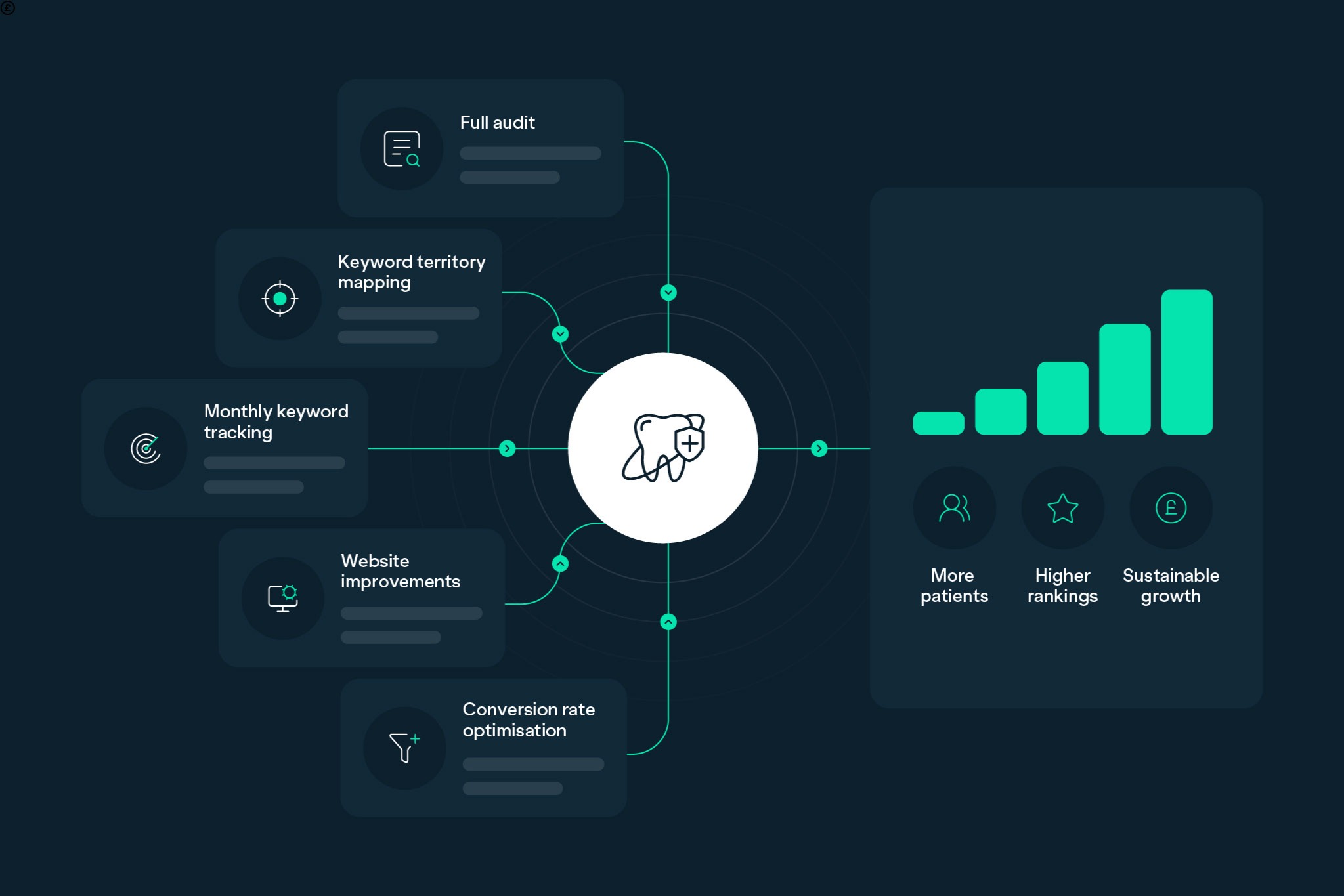
Our approach focuses on:
- A full audit to identify what’s holding your site back
- Territory and keyword mapping to avoid overlap and missed opportunities
- Monthly tracked keywords tied to real treatments and locations
- Website improvements that support both rankings and enquiries
- Integration with conversion rate optimisation so traffic actually converts
Everything is built around data-driven decisions, not guesswork.
You can see how this fits into our wider approach to our SEO service and practice growth.
Want to know exactly why your practice isn’t ranking?
We'd love to show you a clear breakdown of what’s working, what isn’t, and what to fix next.
Just simple, actionable insights - and no long-winded reports or pages of figures, we promise.