





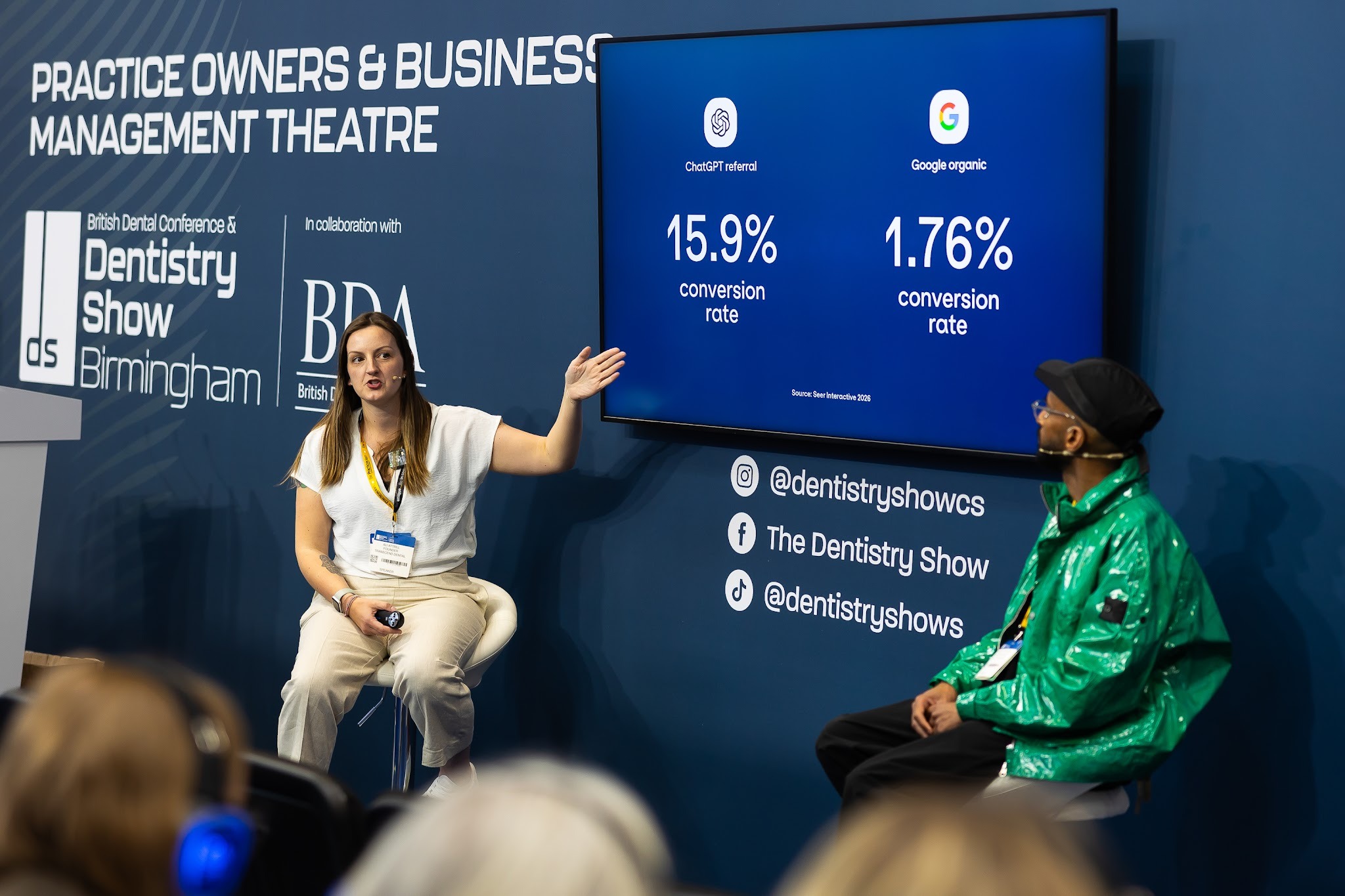
Our 5 biggest takeaways from Dentistry Show Birmingham 2026
After two days of conversations, speaker sessions, live audits and more coffees than we'd care to admit, we've had some time to reflect on Dentistry Show Birmingham 2026. As we've followed up with practices and revisited many of the conversations we had on the stand, a few themes have continued to surface.

While there were plenty of discussions around AI, SEO, websites and marketing, the biggest takeaways weren't really about tactics. They were bigger conversations about what it takes to build a thriving dental practice today, how patient expectations are changing, and how practices can better reach new patients while strengthening connections with the people they already help every day.
Here are the five themes we keep coming back to.
1. Practice owners aren’t looking for shortcuts, they’re looking for clarity
Very few practice owners we spoke to were looking for quick hacks, magic fixes or a way to “game Google”. Most were asking much more grounded questions:
- What’s actually working?
- Where are we being found?
- Why are some treatments generating enquiries and others aren’t?
- How do we know if the money we’re spending is doing what it should?
- How does all of this connect back to the type of practice we’re trying to build?
That last question in particular, is key.
Many dental practices invest in marketing, but still don’t feel fully clear on what’s happening behind the scenes. They might be getting reports, but not necessarily answers, or see rankings moving, but not know whether that movement is translating into the right kinds of patients. And they might be paying for activity every month, without feeling truly confident about what the work is actually building towards.
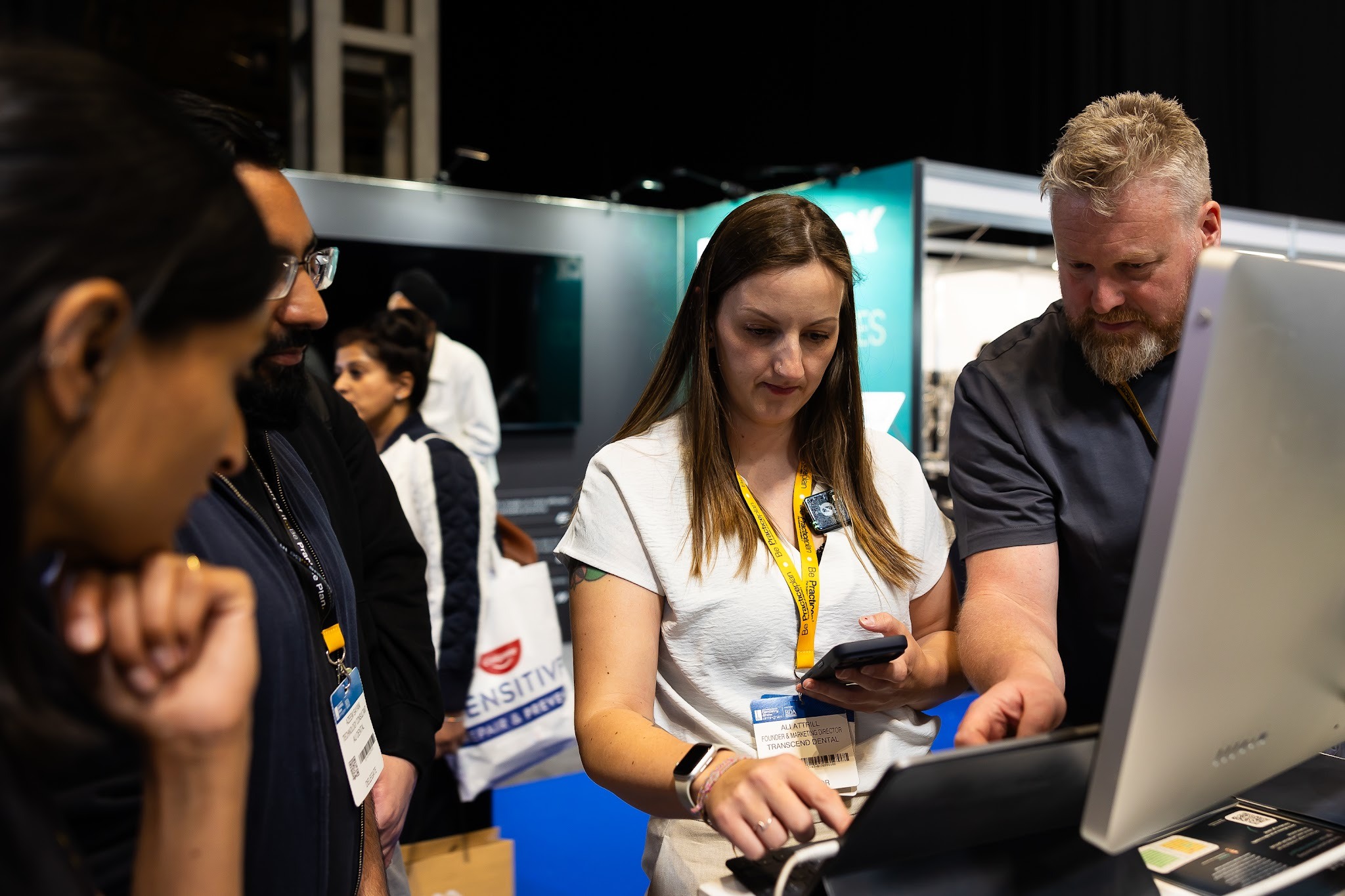
That came through strongly during the live audits we ran on the stand. What often started as a quick look at visibility turned into a much wider conversation about goals, treatment mix, capacity, location, competition and patient behaviour.
And that’s where marketing becomes much more useful.
Not when it produces more data for the sake of it, but when it gives practice owners a clearer picture of where they are, where the opportunities are, and what to prioritise next.
What this means for your practice
- Make sure any marketing reports you receive explain what the figures mean, not just what the numbers are.
- Connect your SEO, ads and website work back to real business goals - such as treatment growth, enquiry quality and chair capacity - and ensure all decision makers in your practice have clarity on what those goals are.
- If you don’t understand what your agency is doing each month, or where money you’re investing is going, ask them to explain it in plain English - a great dental marketing agency will never mind being asked for detail.
2. AI has moved from curiosity to reality
Twelve months ago, many of the conversations we were having with clients around AI still felt quite speculative. Interesting? Yes. Important? Probably. But still a little bit “what does this actually mean for us?”
This year felt different.
Practice owners weren’t asking whether AI mattered anymore - they were asking where it fits.
That shift is important because AI is already changing the way patients search, compare dental practices, and make decisions. People are asking longer, more specific questions, and are increasingly turning to AI-powered search experiences, including ChatGPT, Gemini and Google AI Overviews, to understand treatments and evaluate providers before they make contact.
As a result, patients are often getting in touch feeling much further along in their decision-making journey. They're turning up with more information, more questions and higher expectations around the quality of information and communication they'll receive.
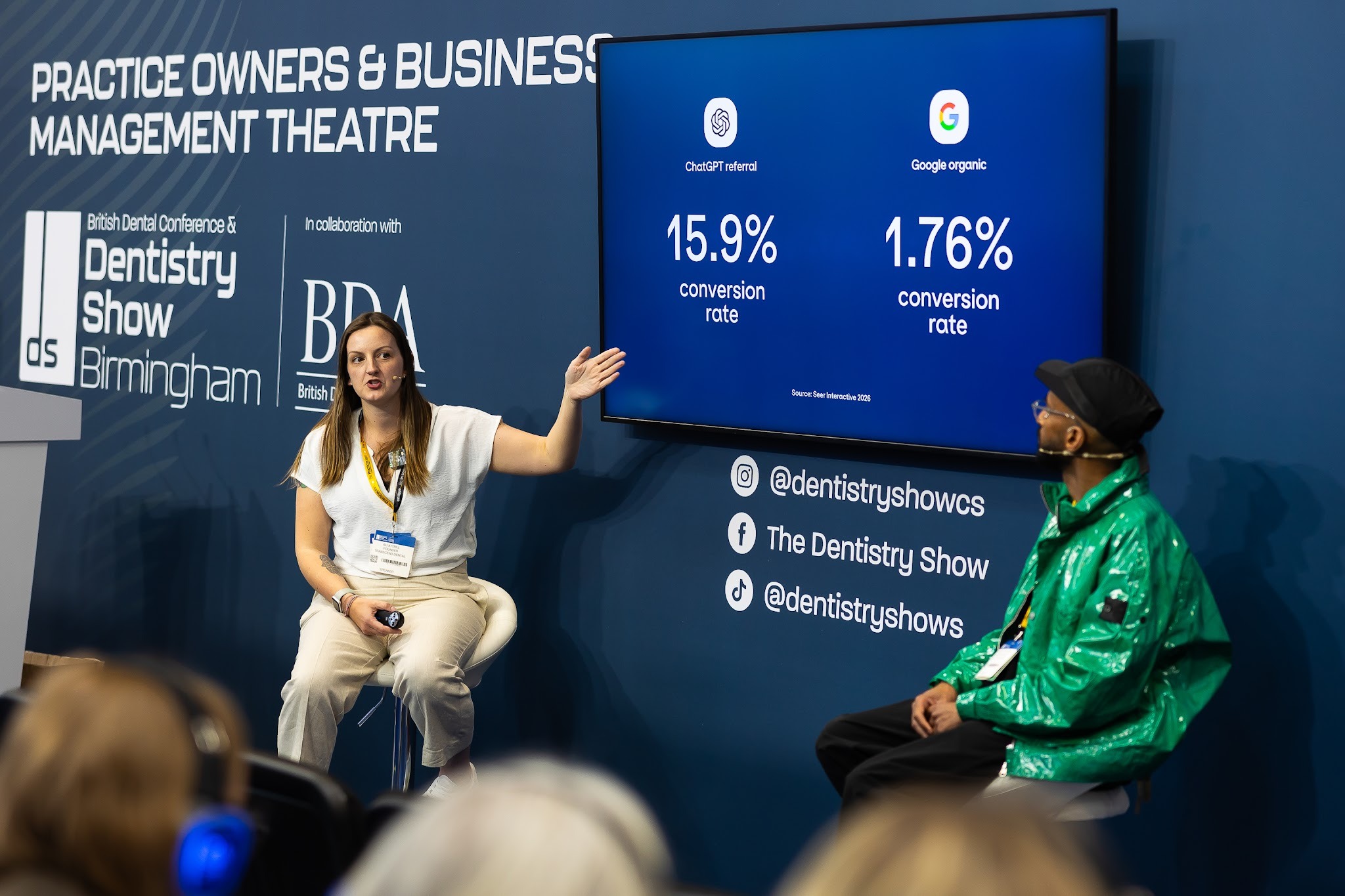
That's why the most interesting conversations at the show weren't really about AI ‘replacing’ humans in a sci-fi type of way. They were more about how AI technology can support the human side of dentistry.
- Could AI help reduce admin?
- Could it support front desk teams?
- Could it help practices respond to enquiries more consistently?
- Could it make treatment information easier to understand?
- Could it help patients feel more supported before, during and after their visit?
That feels like the right conversation for 2026.
AI is not a replacement for trust, clinical expertise or human care. Used well, it can help strengthen all three.
The practices that use AI well won’t be the ones throwing it at every problem. They’ll be the ones using it carefully, with a clear purpose, to make the patient experience smoother, and the practice team’s life easier.
What this means for your practice
- Start by identifying the pressure points in your patient journey, such as slow enquiry follow-up, missed calls or repeated admin.
- Make sure your website content answers the kinds of detailed questions patients are now asking AI search platforms.
- Use AI and automation to support your team where it feels right, not replace the human contact patients still value.
- You don't need to tackle everything at once. Focus on the areas that will have the biggest impact first - and seek support where it makes sense.
3. Visibility gets you found, trust gets you chosen
A lot of our conversations started with SEO, then quickly became more reflective conversations about patient trust.
That probably says a lot about where dental marketing is heading.

Patients have more information available to them than ever before. Before they enquire, they may have looked at your website, your reviews, your clinician profiles, your treatment pages, your social content, your Google Business Profile, your before and afters, and what AI tools are saying about you.
By the time they contact the practice, they’ve often already formed a view.
That means being visible is only the first step. What patients find when they look you up matters just as much.
- Do they feel reassured?
- Do they understand the treatment?
- Do they trust the clinician?
- Can they see real expertise?
- Does the practice feel like the right fit?
- Is the next step clear?
This is where clinical expertise becomes so valuable online.
During our speaker session with Dr Niz from Feel Good Dental, one of the big discussion points was how practices can use specialist expertise to strengthen their visibility. Not by stuffing pages with keywords or producing generic content, but by turning genuine knowledge into clear, useful, easy-to-find information that helps patients make better decisions.
That's increasingly the type of content and expertise search engines and AI platforms are designed to surface.
Helpful content, real expertise and clear answers. Increasingly, these are the foundations of both strong patient relationships and strong online visibility.
SEO is still technical, of course. Structure, speed, schema, links, local visibility and content optimisation all still matter. But the practices that succeed long term will be the ones that combine strong technical foundations with real authority and a patient experience that feels credible from the first search.
What this means for your practice
- Make sure your clinicians’ expertise is visible across your website, treatment pages and educational content.
- Review your trust signals, such as team profiles, reviews, FAQs, case studies, before and afters, photography and patient information.
- Don’t treat SEO content on your website as filler, use it to answer real questions patients are asking, properly.
4. ‘One-size-fits-all’ is becoming harder to justify
Every practice is different. That sounds obvious, but it’s surprising how often marketing is still packaged as though the same approach will work everywhere.
A squat private practice does not need the same strategy as a long-established mixed or multi-site practice. An implant-led clinic has different priorities from an orthodontic provider. A facial aesthetics clinic will have a different patient journey from a family dental practice. Even two practices offering the same treatment in the same region can need completely different positioning, content, tracking and follow-up.
That is why fixed, generic marketing can start to feel limiting.
At the show, a lot of our dental practice SEO audit conversations naturally moved into this space. Once you start looking properly at a practice’s visibility, competitors, treatment goals, website journey and follow-up process, it becomes very clear where the gaps are.

And they are not always the same gaps.
Some practices need help becoming more visible locally. Others need to do a better job of turning website visitors into enquiries. Others already have strong foundations but need clearer reporting and direction to understand what to focus on next. Once you start digging into the details, it quickly becomes clear that no two practices are quite the same.
This is also where technology matters, but only if it stays flexible.
We’ve been developing our own internal systems, audit tools and CRM processes too recently, partly because we kept coming back to the same point: practices need better visibility and more tailored support. Off-the-shelf platforms can be useful, but they can also limit what is possible if the system dictates the strategy, rather than the other way around.
The better approach is to understand the practice first, then build the right support around it.
What this means for your practice
- Be wary of marketing plans that look identical to every other practice's plan.
- A good agency should spend time understanding your goals, challenges and priorities before recommending solutions. Every practice is different, and your marketing strategy should reflect that.
- Look at the whole patient journey, from first search to enquiry, follow-up and booking, rather than focusing on individual channels in isolation.
5. Industry events are definitely not dead
There has been plenty of discussion over the past few years about whether big, face-to-face style industry events still matter.
After Dentistry Show Birmingham 2026, we’re pretty confident they do.
There is something about being in the room that still can’t be replicated by webinars, reports or LinkedIn posts. You hear what people are actually thinking, and pick up on the questions that keep coming up. You see which ideas get people leaning in and hear the frustrations, the ambitions, the worries and the little moments of “oh, that’s exactly what we’re dealing with too”.
Those are the bits that make events valuable.
In two days, we learned an enormous amount about what practice owners are navigating right now. We heard from practices that felt burnt by previous agencies, practices curious about AI, practices unsure how to measure their marketing, practices trying to grow specific treatments, and practices looking for partners who truly understand the realities of running a dental business.
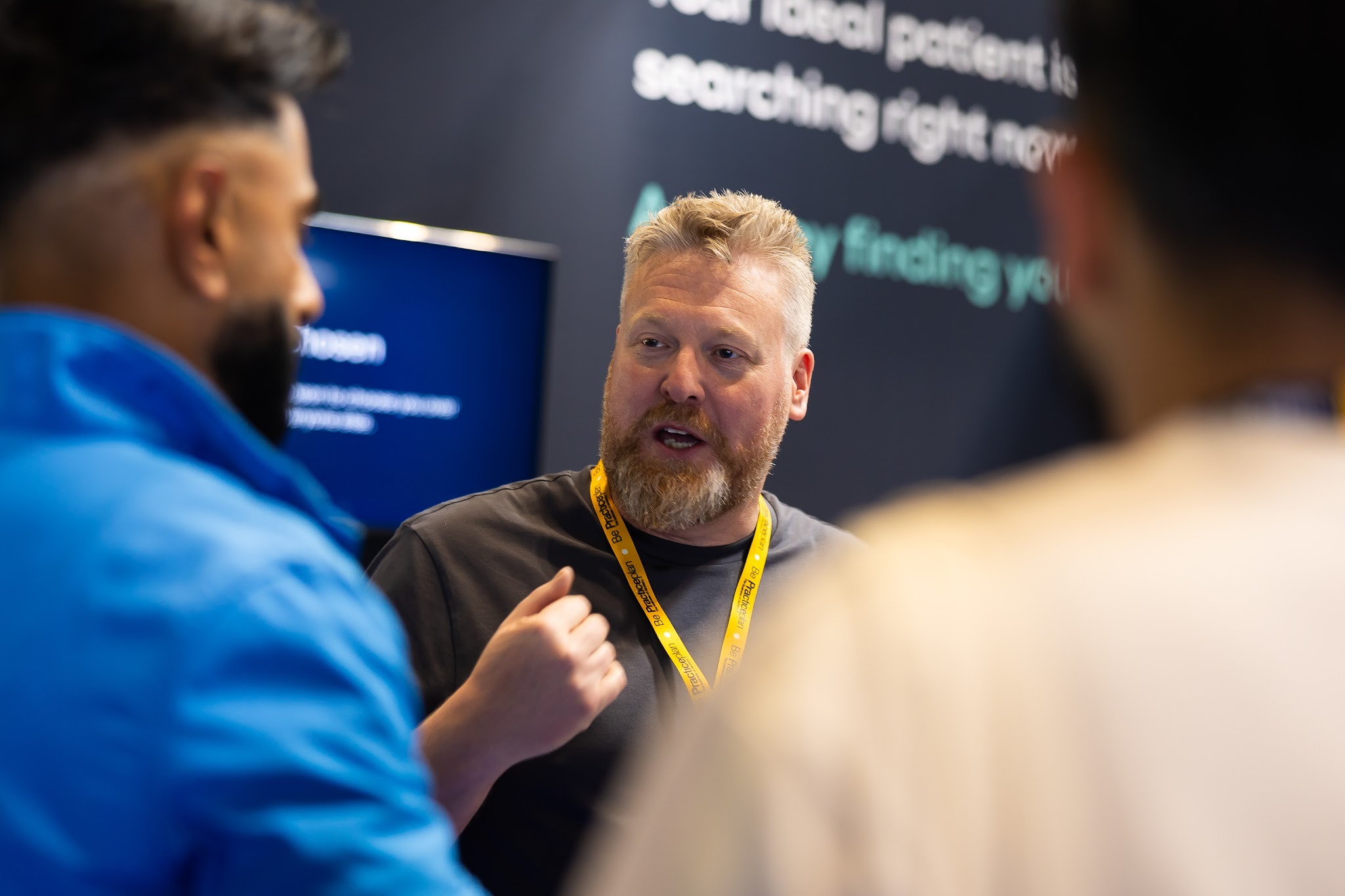
We also met suppliers, software providers and businesses doing genuinely interesting work around patient communication, practice systems, technology and education. In fact, there were so many brilliant ones, we had to round them up in an article, which you can check out here.
It all just emphasised to us that dentistry does not grow in isolation. Practices need strong clinical care, good systems, clear communication, trusted suppliers, useful technology, and marketing that helps the right patients find the right support.
And events like Dentistry Show Birmingham bring all of that into one place.
What this means for your practice
- Use events to ask better questions, and gather valuable answers and information alongside the brochures and handouts (talking of merch, the PÄRLA water bottles were a thing of beauty!)
- Look for partners who really understand both the clinical and commercial realities of your practice.
- Pay attention to the conversations that keep repeating, as they often reveal where the industry is moving.
Looking ahead
If there was one future-facing takeaway from the show for us, it was that successful practice growth in 2026 is becoming more joined up.
It’s not just about ranking higher, running ads or redesigning a website. It’s about how all of those things work together to help patients find you, trust you, choose you and stay connected with your practice over time. Increasingly, practices are being judged not just on how visible they are online, but on how well the patient experience lives up to the expectations created before somebody books.
The fundamentals have not changed completely. Patients still want trust, practice owners still want clarity, and good businesses still care about helping people properly.
.jpeg)
What has changed is the number of places where those decisions are now being shaped, from Google and AI search platforms to reviews, websites, social media and patient recommendations.
That’s why visibility, trust, patient experience, data, communication and follow-up are becoming increasingly difficult to separate. The practices seeing the strongest results are often the ones looking at the whole picture, rather than treating each of these areas as separate initiatives.
A huge thank you again to everyone who shared their experiences, challenged our thinking and helped shape these reflections.
We came away from Dentistry Show Birmingham 2026 with a lot to follow up on, and even more to think about.